
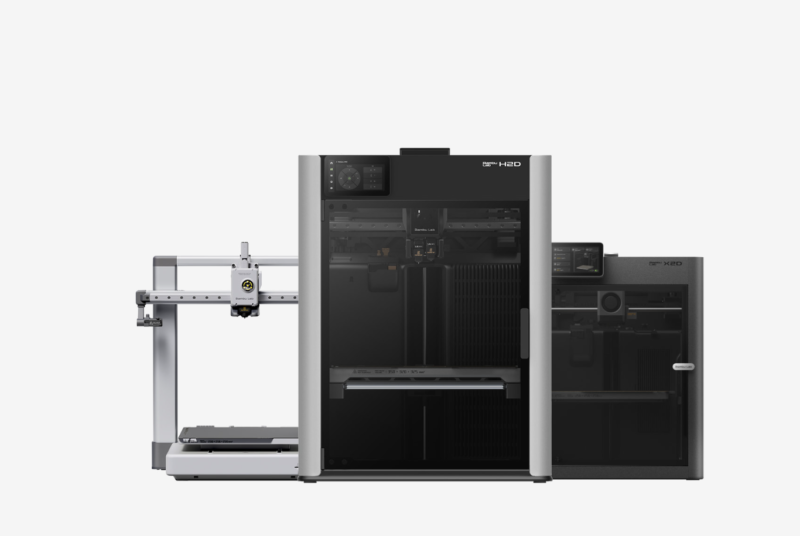
When Bambu Lab launched its first 3D printer in 2022, the company made a bold claim: it had built the fastest, most intelligent desktop 3D printer ever made. The claim held up. What followed was one of the most disruptive product launches in the history of consumer hardware a company that went from zero to over $1.5 billion in annual revenue in under three years, by solving problems that had plagued the 3D printing industry for decades.
Understanding why Bambu Lab succeeded and what makes its technology genuinely different requires looking at what came before it, and what the team decided to do differently.
The Engineering Team Behind the Brand
Bambu Lab was founded by Dr. Ye Tao (known internally as “Dr. Turbo”) along with a team of engineers who had previously worked at DJI, the Chinese company responsible for making consumer drones commercially viable. The parallel is deliberate and instructive.
JI took a niche hobbyist product radio-controlled aircraft and made it so capable, so stable, and so easy to fly that it created an entirely new consumer market. Bambu Lab set out to do exactly the same thing with 3D printing. The insight was straightforward: the technology worked, but it was too hard to use, too slow, and too unreliable for anyone outside the dedicated hobbyist community.
The founding team spent time in maker forums, studying what real users were doing with their printers and what problems they were encountering. They built a mental model of what a reimagined 3D printer would look like and by August 2020 had committed to the roadmap that would become Bambu Lab. The company launched with no formal business plan, securing its first funding on a single sheet of paper.
The name “Bambu” derives from bamboo a material that, in Chinese culture, symbolises integrity and resilience with the spelling adapted from German and French to ensure trademark availability. It is, like much of the company, precise and deliberate.
Core Technology: What Makes Bambu Lab Different

CoreXY Motion System
Bambu Lab’s printers use a CoreXY motion architecture, in which the print head moves in the X and Y axes while the build plate moves only in the Z axis. This approach compared to the Cartesian “bedslinger” design common in budget printers allows for significantly higher print speeds, more accurate positioning at speed, and better print quality at elevated velocities.
The X1-Carbon, Bambu Lab’s flagship printer, achieves print speeds of up to 500mm/s and accelerations of up to 20,000mm/s² figures that were considered unachievable in a consumer desktop printer before Bambu Lab demonstrated otherwise.
Multi-Axis Vibration Compensation
High-speed printing introduces vibration artefacts visible ripples or distortions in the printed surface caused by the resonance of the machine at high accelerations. Bambu Lab addresses this through an accelerometer-based vibration compensation system that runs automatically during a calibration sequence. The printer measures its own resonance characteristics and adjusts movement profiles accordingly, allowing it to print at high speed without the quality degradation that would otherwise result.
Lidar-Based First Layer Inspection
The X1 series incorporates a Lidar sensor that scans the first layer of every print in real time, comparing the actual deposited material against the expected geometry. If the first layer is insufficiently adhered, warped, or misaligned, the printer can detect this automatically one of the most common causes of failed prints and alert the user or halt the print before it wastes hours of time and material.
AI-Powered Failure Detection
A camera mounted inside the printer feeds a machine learning model that monitors print quality throughout the entire job. The system is trained to recognise spaghetti the term used when a print fails catastrophically and extruded filament begins accumulating in the chamber rather than building the intended object and to pause printing automatically when this is detected.
These AI monitoring features work most effectively with Bambu Cloud connected, which has been a source of community debate around cloud dependency (discussed further below).
Automatic Material System (AMS)
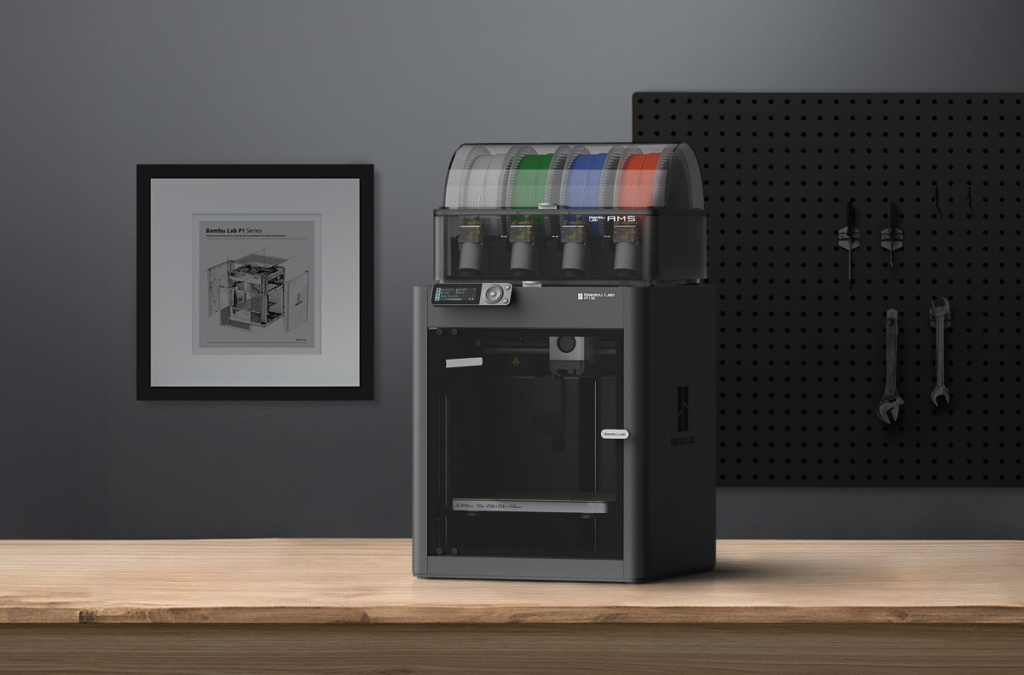
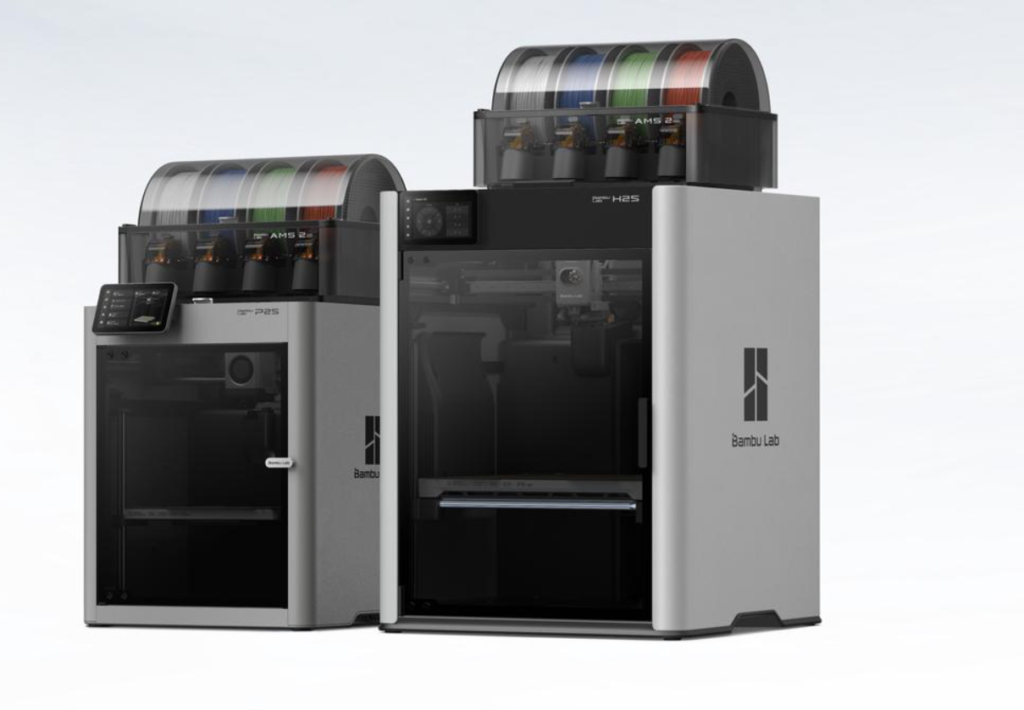
The AMS is Bambu Lab’s multi-material solution a standalone unit that holds up to four filament spools and automates spool switching mid-print to enable multi-colour and multi-material printing without manual intervention. The AMS 2 Pro, the latest generation, improves on its predecessor with active humidity control to protect moisture-sensitive filaments and faster switching mechanics.
The AMS connects to printers via a dedicated hub and communicates filament load status, remaining material estimates, and runout detection. When a spool runs out mid-print, the system can automatically switch to a backup spool of the same material, significantly reducing the risk of failed prints on long jobs.
Enclosed Build Chamber
The X1 and P1 series, as well as the H-series machines, feature a fully enclosed build chamber with active heating capability. This matters significantly for material compatibility. Many engineering-grade filaments ABS, ASA, polycarbonate, and carbon fibre composites require a consistently elevated ambient temperature to print successfully and without warping. Open-frame printers cannot maintain these conditions reliably. The enclosed chamber design, combined with the high-temperature hotend options available on certain models, extends Bambu Lab’s material compatibility well beyond what most consumer printers can achieve.
The Software Ecosystem

Bambu Lab has consistently described itself as a software company that makes hardware an unusual positioning for what appears, on the surface, to be a printer manufacturer. Understanding this requires looking at the full software stack.
Bambu Studio
Bambu Studio is the company’s proprietary slicing software the application that converts 3D model files into the layer-by-layer instructions a printer executes. Built on the open-source PrusaSlicer codebase, Bambu Studio has been significantly extended with Bambu-specific features: automatic support generation, multi-colour painting tools, print profile management, and direct integration with the printer’s cloud and local network APIs.
Bambu Studio is available for Windows, macOS, and Linux, and is updated regularly with new features and printer profiles as new hardware launches.
Bambu Handy and Bambu Connect
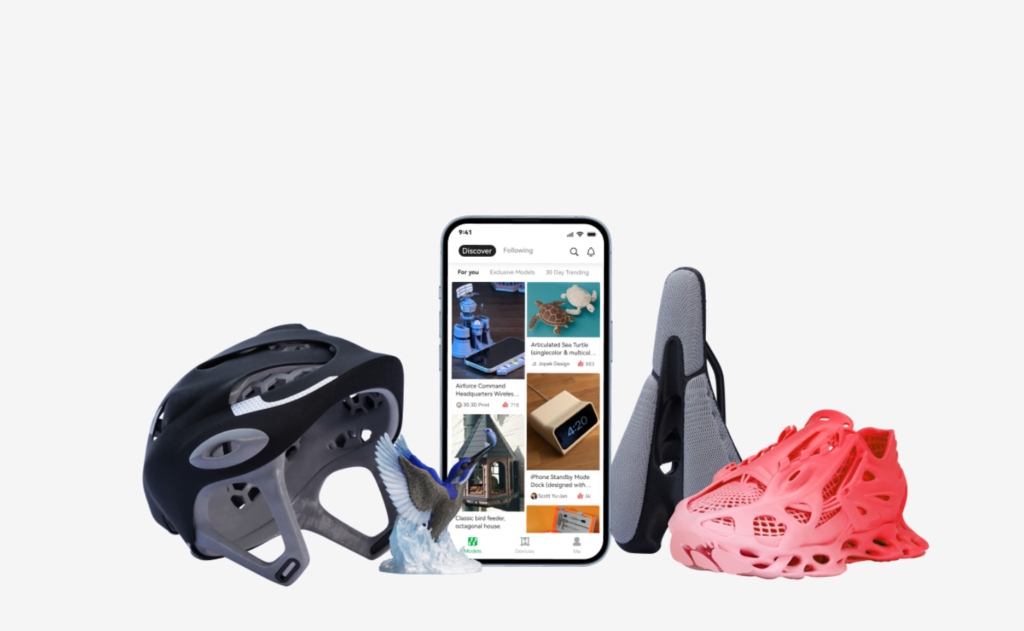
Remote monitoring and control are handled through Bambu Handy (the mobile app) and Bambu Connect (a desktop application). Both provide camera feeds from inside the printer, layer progress, temperature monitoring, and the ability to pause, resume, or cancel prints remotely.
In response to community concerns about cloud dependency, Bambu Lab has continued to develop local network printing capabilities, allowing printers to be operated without cloud connectivity in certain configurations though full feature access remains tied to cloud authentication.
MakerWorld
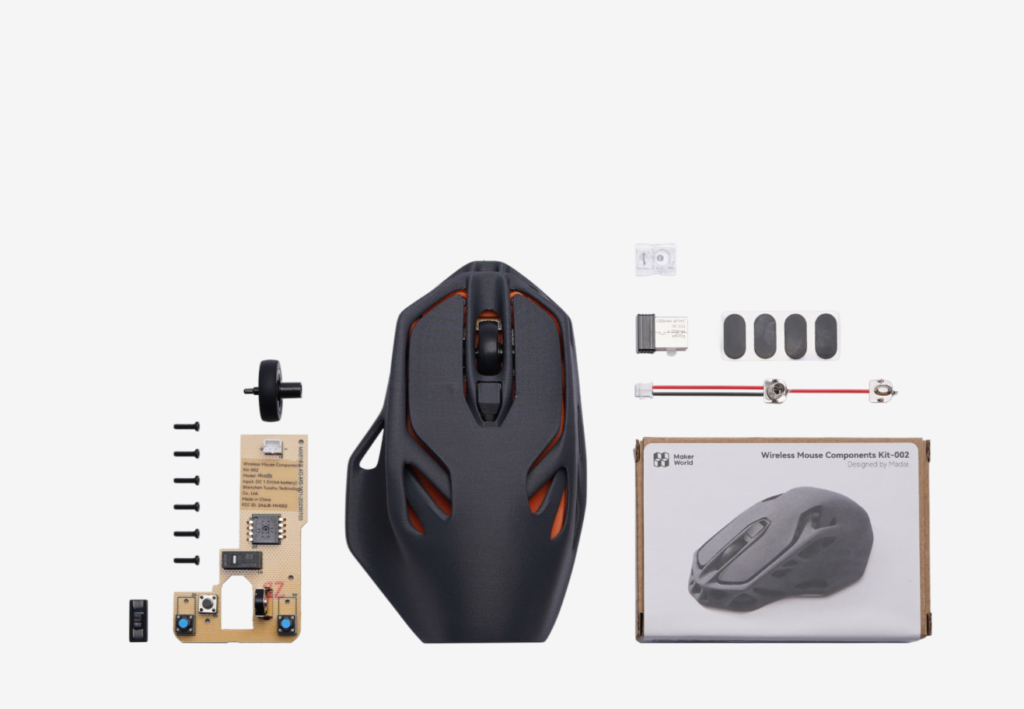
MakerWorld is Bambu Lab’s model-sharing platform a community repository of 3D printable designs, integrated directly with Bambu Studio for one-click download and print. It functions as both a creative community and a practical library, with quality filtering, print profiles attached to models, and a reward system for creators whose designs are downloaded and printed.
MakerWorld was part of the company’s plan from the beginning Bambu Lab understood that a printer is only as useful as the things people can make with it, and that access to a rich, curated model library reduces the barrier to entry for new users significantly.
Cloud Dependency and Security
Bambu Lab’s integration of cloud services has been a persistent point of discussion in the maker community. A 2023 cloud outage caused some printers to print without user authorisation or to cease functioning entirely a widely reported incident that highlighted the risks of deep cloud dependency in consumer hardware.
In January 2025, a firmware update introduced a mandatory authorisation and authentication mechanism for cloud-connected printing, which initially restricted some third-party software integrations. The update generated significant community backlash, and Bambu Lab subsequently revised its implementation to restore broader compatibility.
A security vulnerability in the cloud connection was also identified in 2025. Bambu Lab addressed this in subsequent firmware releases. The incidents have prompted the company to invest more substantially in local network printing capabilities, giving users more control over their machines without mandatory cloud dependency.
These issues are worth understanding for anyone evaluating Bambu Lab hardware particularly for professional or production environments where reliability and control over the software stack are critical considerations.
Every Bambu Lab printer ships pre-calibrated from the factory, with the full calibration sequence vibration compensation, flow rate calibration, and bed levelling completed automatically before the first print. This represents a significant departure from the hobbyist tradition of extensive manual tuning and is one of the most impactful factors in the brand’s accessibility.
Bambu Lab printers carry CE and FCC certifications for their respective markets, and the company conducts ongoing product testing across filament compatibility, mechanical durability, and electrical safety.
The Broader Picture

Bambu Lab’s success has reshaped the consumer 3D printing market in ways that are still playing out. Competing manufacturers have accelerated their own development timelines in response, and the overall standard of what a consumer printer is expected to do speed, reliability, multi-colour capability, software integration has shifted substantially since 2022.
The company’s stated mission is to democratise personal manufacturing: to make the tools of fabrication accessible to designers, engineers, educators, hobbyists, and anyone with an idea that benefits from being able to produce a physical object quickly and at low cost. The hardware and software stack it has built in under three years represents a credible and significant step toward that goal.


